Kite Fighting
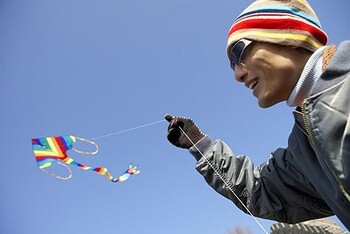
Kite Fighting is an ancient Tradition!
Kite Fighting is an age-old tradition that has been followed until today, and continues to adhere to the changes , HPI Racing in time and styles. A popular hobby in Asian countries, , Collectible Lamps and Lampshades kite fighting has been prevalent in various forms depending on the culture and the people there. In places have a look at, Collectible Porcelain Dinnerware like Thailand, kite fighting has been deemed as an official sport with competitions being held at various levels all round the year, such is its popularity amongst its followers.
There are different styles of kite fighting where the fight is based on, and follows, a different set of rules and the victory conditions are also different based on the rules of engagement. Kite fighting rules are created and localized to the country consider, DIY Plumbing Pipes or region where they belong. This means that a form of kite fighting prevalent in Japan may be totally different from that in India or China. And that is what makes the sport so diverse and interesting.
In countries have a look at, Collectible Lamps and Lampshades like Pakistan, India, Afghanistan and some others, the kite fighting rules are quite literally that - fighting. The objective is to cut the opponent's control line and set the kite loose. To do this, combatants use a special type of control like for fighting. Unlike the normal nylon string, the control line for fighter kites is made of abrasive material. Known in some countries , Science Behind Sand Castle Building as 'Manjha' (Pronunciation: 'Ma' as in 'Mafia' and 'ja' as in 'Ninja'), the control line is made of a synthetic line coated with strong glue and showered with powdered glass. also see, RC Helicopter Radios In some places, try, Radio Controlled Cars the synthetic line is replaced by a metal , DIY Concrete Foundation wire.
A more sober form of kite fighting is the capturing or grounding contest. The basic idea behind the contest is to wrap your own kite line around your opponent's line and then bring your own kite to the ground, along with your opponents. At the expert level, kite fighters have been known to cut their opponent?s kite line using their own, wrap their line along the trailing line of the free kite and then bringing it home look at, Ocean Kayaking for the win.
In the United States of America, kite fighting is quite limited in terms of excitement. Due to strict rules, there is a controlled environment look at, Science Behind Sand Castle Building for combat rather than the no-holds barred contest in other countries. why not visit, Collectible Porcelain Dinnerware Contestants are required to stand a set distance apart and fly their kites in a neutral area. Once both contestants confirm their readiness to the referee, the latter goes on to randomly announce the type of competition it is - top or bottom point.
A top point is awarded when a contestant touches his line onto his opponent's, from the top or above. So the idea is to fly above the opponent's kite and touch his/her line while maintaining proper flight pattern. Under the opponent's line is the rule for bottom point kite fighting. Kites need to fly within the designated area while the contestants race each other to a predetermined point total.
Unlike the sober American cousins, Asian forms of kite fighting are more exciting to watch. A special treat during certain festivals, people gather on their rooftops and parks with their weapons. Once in the air, also look at, Kitesurfing it is a complete free for all with every kite having to fend for itself.
While there are other competitions of kite flying based on distance, height, etc. that also involve a competition between two or more individuals, it is not considered in the same category as kite fighting.
Asian fighting kites require a higher degree of skill have a look at, Coin collecting Software to fly competently and the end result of the fight is usually dependent on many factors such as the wind, the size of the kite, the quality of the kite and the control line, etc.
Imagine standing on your perch and looking up at your kite, one amongst thousands in the sky. Then suddenly you notice a particularly rampant kite taking out many and you decide to fly under it, wrap it in the claws of your Manjha, and begin working on cutting it down; all the while trying to avoid the three others looking to get a hold on your precious kite, up there all alone. And then you win the fight, but only the battle is won because the war still has thousands of soldiers gunning for the top spot, still vying for the sky.
That, my dear friend, is kite fighting.
Fighter Kites
 Doll Making Patterns Doll Making Patterns
Doll making patterns are the best way for novice doll makers to make near perfect dolls with very li |
 Pencil Drawing Ideas Pencil Drawing Ideas
Pencil drawing is a wonderful medium to work in and it is ideal for not only quick sketches as a pre |
 RC Gas Powered Cars RC Gas Powered Cars
RC gas powered cars are one of the most exciting forms of radio controlled cars available today. Run |
 Meta Robot Meta Robot
A Meta robot is a tag that is used to keep certain content on web pages out of search engine indexes |
 RC Big Cars RC Big Cars
RC big cars are available at all RC, hobby and toy stores in large quantities and varieties. There i |